This week we used the barrier game strategy to help us create a collaborative story told through the eyes of the shoes in the image. An area of focus in LS2 is to ensure that our completed writing is correctly punctuated so that what we have written makes sense to our readers. My learners had 15 minutes collaborative planning time using the 5 senses to guide their thinking, then had a further 15 minutes to co-construct their text. This isn't as easy as it sounds as they had to 'create' their text sitting back to back with only their plan to prompt them. Each pair wrote sentence by sentence with one partner taking over after the other had added the full stop. It was really pleasing to see how much of this year's learning they have made strong connections to.

Showing posts with label Collaborative challenge. Show all posts
Showing posts with label Collaborative challenge. Show all posts
Saturday, 14 May 2016

Friday, 13 May 2016
Recalling our Times Tables at Speed
Recalling our times tables at speed is an important skill to master, and made even more fun with hands on games that make us think quickly in a race against the clock. Well done team! So many of you have made huge progress.


Friday, 4 March 2016
Collaborative Home Learning
A superb example of collaborative home learning by Mia and Sajiha. They have thought carefully throughout to make sure their readers can make a connection to their information.
Friday, 20 March 2015
Room 5's Collaborative Responses
Today we used Padlet to record our collaborative responses from our smart searching challenge to the questions:
- What is the difference between being a NZ citizen and a permanent resident?
- Why do people from other countries become NZ citizens?
- What would/has stopped people becoming NZ citizens? - obstacles (eg: cost of application)

Monday, 9 March 2015
Sharing our thinking
Today we worked in our Maths thinking groups to solve an addition problem. The task involved the students solving the problem independently, then explaining the strategy they used to their groups. Each group then chose the strategy they felt best suited the problem and created a collaborative DLO (of their choice) to help someone else learn that strategy. The final task was to present their DLO to the class. Fantastic work Room 5!
Monday, 23 February 2015
Theme and Rheme
Today we explored how theme and rheme can help us create sentences that flow into one another. The theme of a sentence is the topic (what is being talked about). The rheme is the information (what is being said about the topic) that follows. Often the rheme becomes the theme of the next sentence. Each group were challenged to write the next two possible sentences by paying close attention to the theme and rheme.
New Zealand waters are overfished. This overfishing will have serious consequences. Consequences could consist of low storage in fish stores Low fish numbers could lead to having no fish and chips. - Fine, Zahn, Dontalian, Tiare
New Zealand waters are overfished. This overfishing will have serious consequences. These serious consequences will lead to lower fish numbers. Lower fish numbers means less seafood available in stores. - Tim, Courtney
New Zealand waters are overfished. This overfishing will have serious consequences. These serious consequences will lead low fish numbers. A decrease in the population of fish will lead to people not having jobs. - Jasmine, Oh S’Mar, Juanita
New Zealand waters are overfished. This overfishing will have serious consequences. These consequences may result in less seafood being available in stores. If seafood is not available in stores people will start buying it illegally. - Shantay, Taikehu, Saruja, San Tat
New Zealand waters are overfished. This overfishing will have serious consequences. These serious consequences will lead to smaller amounts of fish. This will lead to smaller amounts of fish and seafood in stores. - John, Jacob, DJae
Wednesday, 4 February 2015
Building our Collaborative Classroom
Working collaboratively this year will help Room 5 learn with and from each other. To begin building this collaborative ethos the students worked in groups to experience and explore the key competencies of 'Thinking'; 'Relating to Others'; 'Using Language, Symbols and Text'; 'Managing Self' and 'Participating and Contributing'.
The challenge:
- To work together to decide the meaning and purpose of each competency and what this might look like in our classroom.
We think the key competencies...

"... will improve our work and move it to the next level. This is because we will have built confidence in our answers and will have learned key information from our friends."
Fine, San Tat, Dontalian, Saruja and Tim

"... advise you to use them when working individually, in partners, or groups to produce different strategies in order to solve problems."
Yvette, Raymond, Tiare, June and Jacob
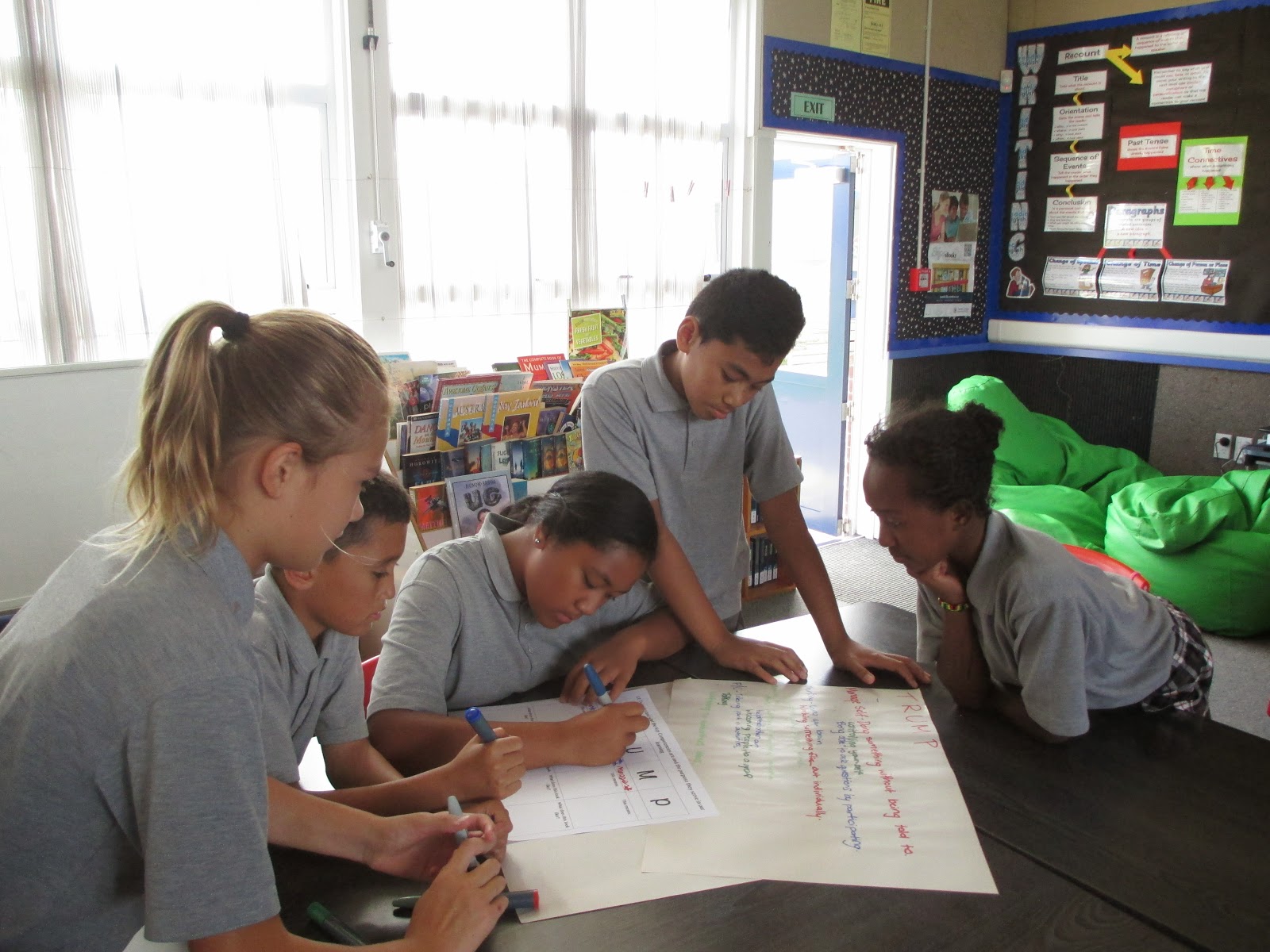
"... could help us think about what we would like to do in the future and help us achieve our goals, by making connections with others to help us with our work."
Djae, Halatoa, Samantha, Evelyn and Paige

"... help us to have courage in our school work. They make you feel more confident to take risks in your education."
Latham, John, Zahn, Jasmine and Sajiha

"... will help us get more opportunities to ask or answer more questions about our learning."
Sebastian, Oh S’Mar, Zeba and Ducati
Tuesday, 2 December 2014
Hexagon Group's 3D Challenge


Today's challenge was to create 3d shapes using the same polygon on each face. Once this had been completed, and the process photographed, the groups were asked to work collaboratively to create a presentation (of their choice) to share their learning. No instructions were given... just hints like the one that reminded the groups to record all the questions they asked each other. This is all their own work and was confidently presented to the class to show their understanding. Great work everyone!
Pentagon Group's 3D Challenge

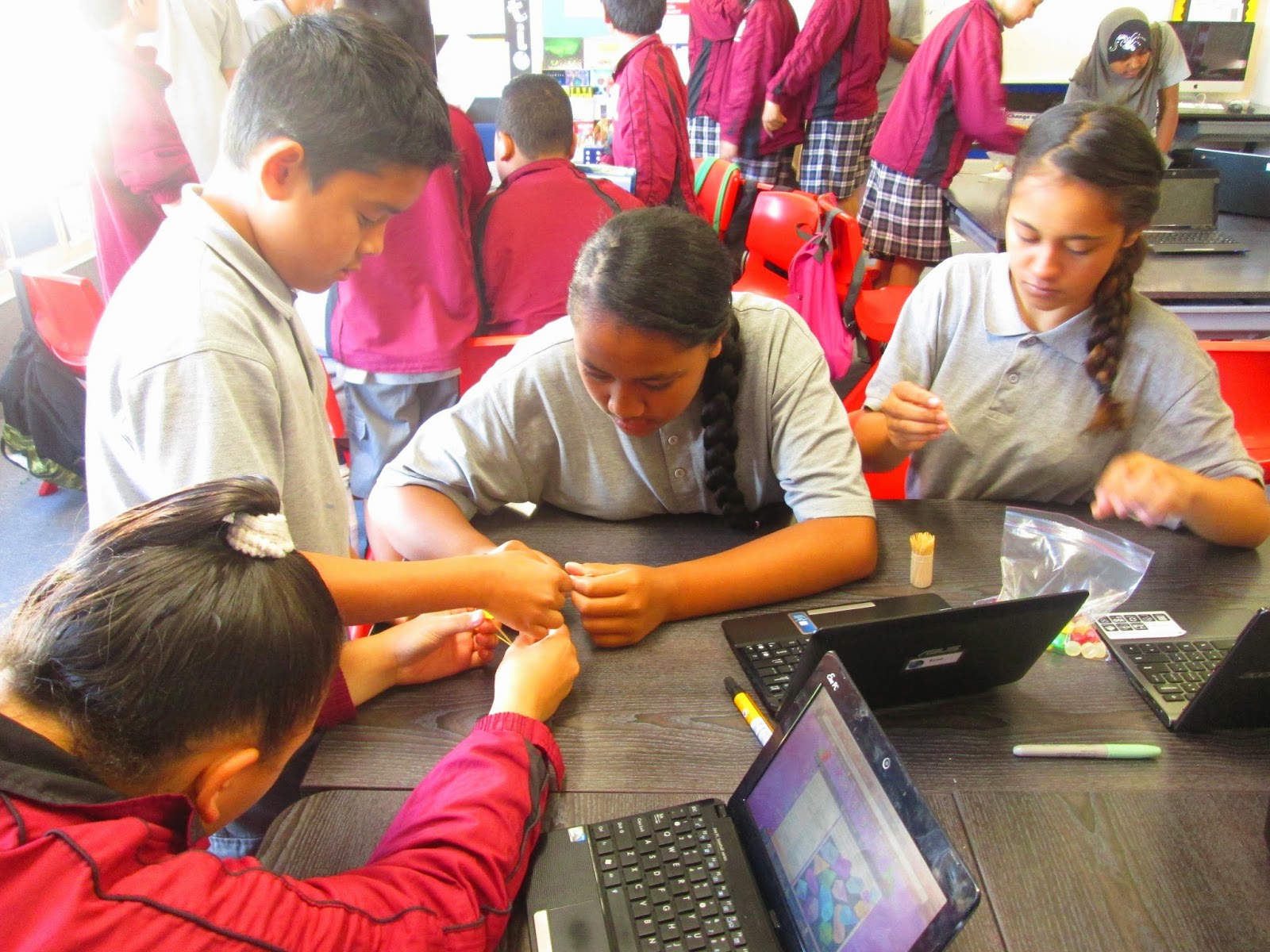
Today's challenge was to create 3d shapes using the same polygon on each face. Once this had been completed, and the process photographed, the groups were asked to work collaboratively to create a presentation (of their choice) to share their learning. No instructions were given... just hints like the one that reminded the groups to record all the questions they asked each other. This is all their own work and was confidently presented to the class to show their understanding. Great work everyone!
Heptagon Groups 3D Challenge


Today's challenge was to create 3d shapes using the same polygon on each face. Once this had been completed, and the process photographed, the groups were asked to work collaboratively to create a presentation (of their choice) to share their learning. No instructions were given... just hints like the one that reminded the groups to record all the questions they asked each other. This is all their own work and was confidently presented to the class to show their understanding. Great work everyone!
Square Group's 3D Challenge


Today's challenge was to create 3d shapes using the same polygon on each face. Once this had been completed, and the process photographed, the groups were asked to work collaboratively to create a presentation (of their choice) to share their learning. No instructions were given... just hints like the one that reminded the groups to record all the questions they asked each other. This is all their own work and was confidently presented to the class to show their understanding. Great work everyone!
Wednesday, 10 July 2013
Teagan and Jacob explain the colour wheel
Teagan and Jacob made a Google presentation on colours. These are the things you can find out on, primary colours, secondary colours, cool/warm colours, hue, complimentary colours and tints and shades. This activity followed on from our 'Starry Night' collaborative challenge.
Room 9 were set a collaborative challenge. To be successful they needed to use their maths knowledge to help them create an enlarged reproduction of Van Gogh's 'Starry Night'.

The image above shows what the real painting looks like.


I think both teams successfully completed their collaborative challenge and Room 9 has a fabulous wall display as well.
Subscribe to:
Posts (Atom)